

Your cart is empty
Explore our premium supplements to support your health and well-being.

Grass-fed organs for energy, hormones, and whole-body health.

If you look at photos from the late 1800s or early 1900s, something stands out immediately: people were lean. They weren't necessarily shredded, and they didn't worry about tracking macros, cycling carbs, or taking weight-loss drugs.
They were just… naturally lean.
At that time, obesity rates were estimated to be around 3-4%. Today, that number is closer to 40%, along with one-third of U.S. adults now being classified as having prediabetes or diabetes.
So what changed? It wasn’t our biology. That takes many generations to evolve, and our genetics haven’t meaningfully shifted in the last 150 years. But the world around us has changed dramatically.
In particular, three aspects of daily life that shaped metabolism for over 2.5 million years have shifted in major ways:
These weren’t “healthy habits” our ancestors had to think about. They were simply built into everyday life. When those patterns changed, what once helped humans survive began working against us—favoring energy storage, conserving resources, and making it easier to gain weight.
Let’s take a closer look at the three biggest shifts that help explain why our ancestors were naturally lean, and what that means for your health today.
Nearly 75% (3 out of 4) American adults are now considered overweight or obese, with about 42% falling into the obesity category. These rates are among the highest ever recorded in U.S history, and they're only expected to continue climbing,
The rise in obesity didn’t happen gradually over thousands of years. Instead, it occurred rapidly, mostly within the last 100 years, and even more dramatically in the past 50 years.
This tells us something important: The obesity epidemic isn’t due to a sudden lack of willpower. It's really a result of major changes in our environments, food supply, and lifestyles.
When you zoom out, three major changes line up almost perfectly with rising obesity rates:
Each of these factors affects how your body regulates hunger, hormones, energy, and fat storage. And together, they create a perfect storm for causing weight gain and making it hard to lose it.
For most of human history, food came directly from animals, plants, and the land—and they were hardly processed at all. In comparison, today, a large percentage of calories comes from ultra-processed foods, which are industrial formulations designed to be hyper-palatable, shelf-stable, and easy to overconsume.
This shift alone has had a huge impact on people's body compositions. For example, a landmark study in 2019 compared two diets:
In the study, healthy adults lived in a controlled setting for one month and were given either diet for two weeks each. Importantly, both diets were carefully matched for calories, protein, fat, carbohydrates, sugar, fiber, and sodium.
Despite this, participants who ate the ultra-processed foods diet:
When the same participants switched to whole foods, they naturally ate fewer calories and lost weight, without being told to restrict anything. In other words, the study demonstrated how ultra-processed foods themselves can drive overeating and weight gain, independent of calories or macros.
Your body has built-in systems and hormones that are designed to regulate hunger and satiety. One of the most important ones is described as the "protein leverage hypothesis."
This theory suggests that humans are biologically driven to eat until they meet their protein and nutrient needs. When food is nutrient-dense, our appetite naturally shuts off. But when food is diluted, low in protein, vitamins, and minerals, hunger stays high, and we keep searching for more food.
This is where modern diets fall short. They provide plenty of calories, but the problem is that ultra-processed foods are:
If you ever feel like youre eating plenty and still have cravings, you might be consuming enough calories but not enough nutrients—which can lead to persistent hunger, even when you’ve eaten “enough.”
To understand how powerful whole foods are, look at traditional populations. One example is the Kitavan Islanders of Papua New Guinea, who are often cited in research because they consume a diet that is:
Despite this, they have:
This challenges the idea that carbs or fat alone drive weight gain. Instead, it reinforces the idea that food quality matters more than macronutrient ratios.
Another major shift in our food supply and diets over the past 100 years is sugar consumption.
Around the year 1700, the average person ate about 4 pounds of sugar per year. By 2000, this jumped up to about 150 pounds per year, meaning people ate 37x more sugar.
That increase didn’t just add calories to our diets, either. It fundamentally changed how the body regulates insulin (a hormone that brings sugar into our cells), hunger, and fat storage.
It's now uncommon to eat organ meats regularly, as muscle meat has become the primary source of animal protein in people's diets.
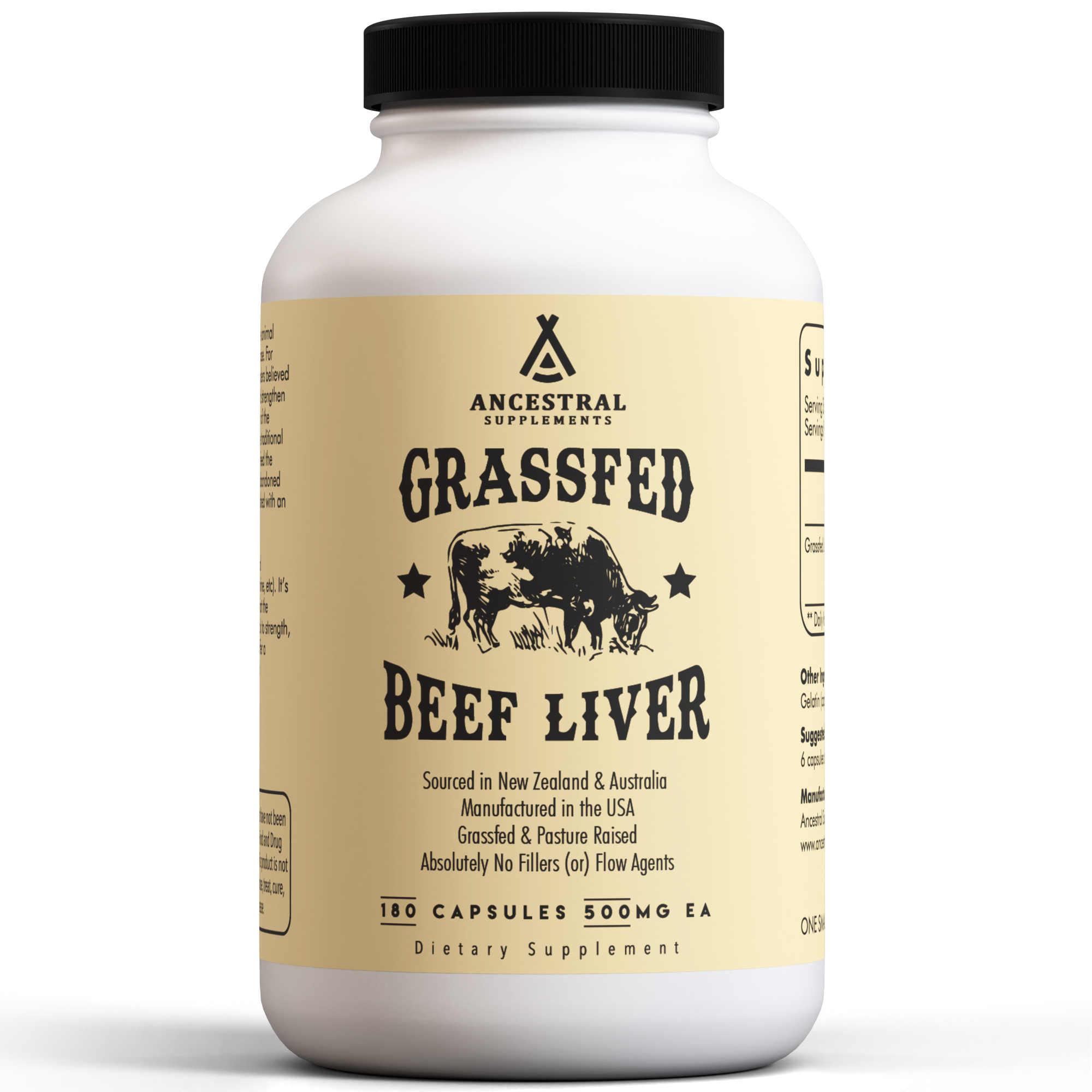
But it wasn't always this way. For most of human history, people didn’t just eat muscle meat—they ate basically the entire animal, including organ meats like beef liver and kidney, connective tissues, bone marrow, and fat.
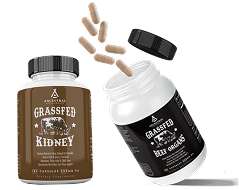
These foods are among the most nutrient-dense on the planet, but they're largely missing from modern diets. This is where targeted whole-food supplements can help bridge the gap and potentially even lower the likelihood of common nutrient deficiencies.
These ancestral supplements provide many of the same nutrients found in organ meats and other animal-based foods, but in a form that’s far more convenient and easy to incorporate into your daily routine.
In that sense, desiccated supplements offer a practical way to bring back the level of nutrient density that was once a natural part of the human diet.
Research also shows that many adults now spend 8 or more hours per day sitting, outside of sleep.
For example, adults on average spend about 3 to 4 hours per day on their phones, often while sitting, commute for roughly 45 to 60 minutes daily, and watch 2 to 3 hours of TV each day. When you layer in desk work, meals, and general downtime, it’s easy to see how movement has been gradually engineered out of our lives.
Our ancestors didn’t “work out” or go to the gym. They moved throughout the day as part of survival, for example, by:
Movement wasn’t a scheduled event but an embedded part of daily life. Today, since we lack this type of natural movement, we try to compensate with:
These are helpful, but they don’t fully replace the benefits of constant low-level movement.
Movement affects far more than calorie burn. It directly influences:
When your movement decreases, your metabolism often becomes less flexible. Energy is stored more easily, and burned less efficiently, and that can create a vicious cycle of weighing more than you'd like and struggling to lose it.
You don’t need to abandon modern life and live like a caveman to reclaim your health. Instead, you can aim for realistic changes to your routine, such as:
Supporting energy production nutritionally can also help. Together, movement and nutrient support help restore metabolic flexibility. For instance:
Your metabolism doesn’t just depend on what you eat or how much you move. It’s also tightly linked to your circadian rhythm, which functions like your "internal clock." This clock regulates:
A well-functioning circadian rhythm is the backbone of metabolic health.
Sleep deprivation has been consistently linked to weight gain for several reasons. Even short-term sleep loss can:
This is largely due to changes in leptin and ghrelin, the hormones that regulate hunger and fullness. Less sleep causes more hunger, which often causes higher calorie intake.
Stress has a similar impact on your metabolism and weight as sleep deprivation. Chronic stress leads to elevated cortisol, which is associated with increased fat storage, especially around the abdomen.
Studies have found that adults with higher long-term cortisol levels tend to have larger waist circumferences and higher BMI.
Interestingly, research on pre-industrial societies shows that sleep quantity wasn’t drastically different from today (most people slept about 7 hours per night or less). But what was different was:
Today, many of us are struggling with disrupted circadian rhythms, and as a result, poor sleep, due to:
Restoring your circadian alignment starts with your lifestyle. Habits that can go a long way in improving your metabolism, plus giving you more energy and lifting your mood, include:
What does your diet have to do with sleep? More than you might think. Certain nutrients, like magnesium and amino acids, help your mind relax and allow you to return to a more natural rhythm of sleep. Supplements can help provide many of these nutrients, such as:
For over 2.5 million years, humans evolved under very specific conditions:
Modern life, by comparison, has existed for only about 150 years. From an evolutionary perspective, that’s a short blink of time, which means we’re still running ancient biological hardware in a very different environment.
When the mismatch becomes too great, our bodies break down. That means weight gain isn’t a personal failure, but a predictable response.
You don’t need to live like it’s 1820 to improve your health. But you do need to give your body the sleep, food, and movement it needs to thrive. Start with one area:
Nutrition:
Movement:
Sleep & Stress:
If you’re feeling stuck despite “doing everything right,” zoom out and look at the bigger picture. Pay attention to your everyday habits and what you're exposed to, plus what you might be missing. Then try starting with one ancestral shift:

Walk into a grocery store today and you’ll find more choices than any previous generation could have imagined. The average U.S. supermarket carries...

The sun is setting earlier, but your schedule is the same and your to-do list hasn’t gotten any shorter. Despite the drive to hibernate, you still ...

Drinking enough water matters. But hydration involves more than water alone.If you've spent any time in the health world, you've heard it a thousan...

The Foods Once Valued Most Are Now the Ones Many IgnoreWalk through a grocery store, and you’ll see protein bars, cereal, yogurt cups, frozen meals...


Register to receive a notification when this item comes back in stock.