

Your cart is empty
Explore our premium supplements to support your health and well-being.

Grass-fed organs for energy, hormones, and whole-body health.


Just one bite of organ meat can deliver more concentrated nutrition than many entire meals.
Yes, a single bite.
For most of human history, organ meats were among the most prized foods in ancestral diets, often reserved for those who required the greatest nutritional support, including growing children, pregnant women, recovering mothers, and elders. These foods weren't just eaten for survival, but as powerful tools for building strength, resilience, fertility, and vitality.
Today, organ meats are somewhat misunderstood and dismissed, despite being some of the most nutrient-dense foods available.
Most people's diets provide more than enough calories, but they frequently fall short in essential micronutrients for overall health. This imbalance between caloric intake and nutrient density is one of the most common yet under appreciated challenges in nutrition—but organ meats can help to bridge that gap.
In this article, we’ll explore why these traditional foods are so biologically valuable, the unique nutrients they provide, and how they can fight common nutrient deficiencies to support everything from cellular energy and brain function to mood and reproductive health.
Many people assume that eating enough food automatically equates to being well-nourished. But biologically, this is not necessarily true.
Modern diets tend to be calorie-dense but nutrient-poor, a pattern that's strongly associated with metabolic dysfunction, fatigue, cravings, and higher risk for many chronic conditions.
Our food system—which focuses largely on high yields, long shelf lives, and profits—doesn't do a great job of providing nutrient concentration.
Analyses of USDA food composition data have shown that many fruits and vegetables contain significantly fewer micronutrients (minerals and vitamins) than they did decades ago, with some crops having up to 50% fewer nutrients.
Soil depletion, reduced biodiversity, early harvesting, and extended storage times all contribute to declining nutrient levels in even the "healthy foods" in our food supply.
This explains why many people say, “I eat well, but I still don’t feel great.”
Recent research estimates that billions of people worldwide are deficient in at least one key vitamin or mineral, especially calcium, iron, magnesium, and vitamins D, C, and E.
Even people who actively attempt to eat “clean” often struggle with issues like:
How come? Because nutrient intake governs far more than body weight alone.
Micronutrients help regulate and contribute to:
Organ meats represent one of the most effective solutions to the nutrient density problem described above.
By definition, organ meats are the internal organs of animals like cattle and chicken, and include liver, heart, kidneys, spleen, pancreas, and brain. What makes these foods exceptional is their rich sources of nutrients, which are based on their biological functions.
Organs are metabolically active tissues. They're responsible for storing, filtering, processing, and regulating nutrients.
Because of this, vitamins, minerals, enzymes, peptides, and cofactors accumulate within organ tissues at concentrations that far exceed those found in "muscle meat" (the most common animal products eaten today).
In many cases, nutrient levels in organ meats are 10 to 100 times higher than comparable cuts of meat.
Overall, organ meats deliver extremely high nutritional value per calorie.
Each organ holds a unique mix of nutrients, mostly based on its role in the body.
For example, the liver, which functions as the body’s primary detoxification and metabolic hub, is very rich in B vitamins, vitamin A, iron, and other compounds that assist in energy production and cellular repair.
Here's a closer look at the nutritional profile and benefits of different organ meats:
Liver is sometimes called "nature’s multivitamin," and for good reason. It provides a dense concentration of nutrients that support energy production, hormone regulation, and cellular repair, including:
Unlike synthetic isolates, liver delivers these nutrients in their natural, bioavailable forms alongside critical cofactors, which help the body absorb and use the vitamins and minerals.
For many adults, liver remains the single most impactful nutritional upgrade available they can make to their diets. This is especially true for those with fatigue or anemia (liver is one of the best supplements for women), and anyone looking for supplements to gain more energy.
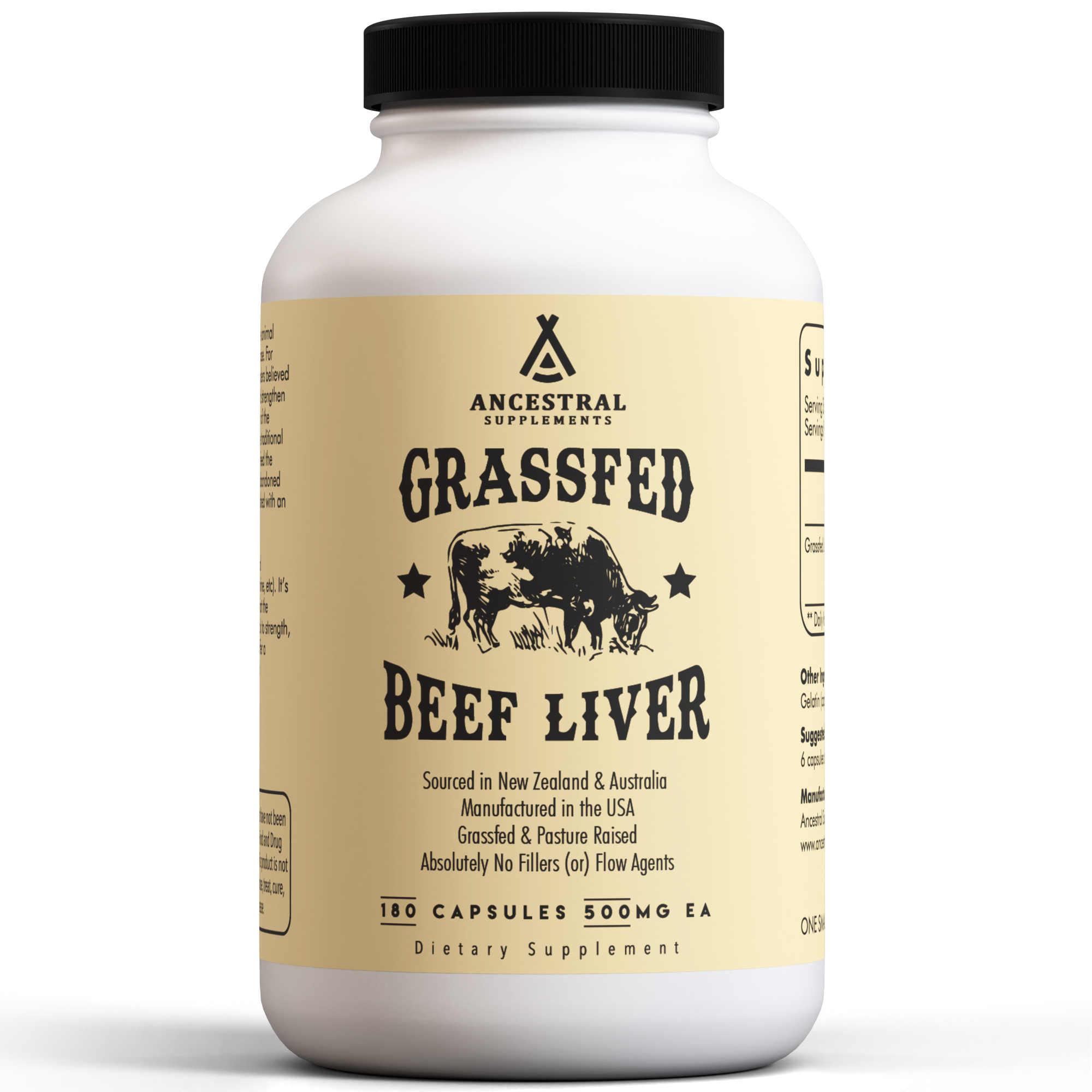
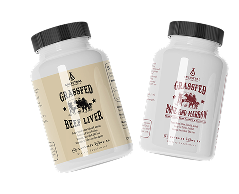
Grass Fed Beef Liver capsules are a convenient way to access these compounds without preparation or taste barriers. Benefits include:
Beef heart is a metabolically demanding organ that's full of CoQ10, a compound central to mitochondrial energy production, along with B vitamins, selenium, and supportive peptides.
CoQ10 is one of the most valuable nutrients in Grass Fed Beef Heart and supports:
Because the kidneys are involved in maintaining fluid balance, removing waste products, and regulating key metabolic processes, the nutrients found in dessicated (dried) kidney tissue can help support several foundational aspects of health, such as blood filtration, detoxification, and immune defense systems.
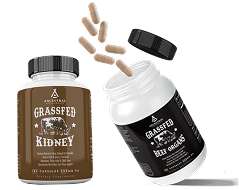
For those seeking a convenient way to obtain these unique compounds, Ancestral Supplements Grass Fed Beef Kidney provides a highly bioavailable source of kidney-derived nutrients that are difficult to replicate through isolated supplements alone.
Adding Kidney to your diet can help promote:
Spleen serves as a reservoir for red blood cells and is exceptionally rich in heme iron, a highly bioavailable form of iron that's needed for oxygen transport and healthy energy levels. Spleen has about 5 times the amount of iron as liver, which is already a great source.
Grass Fed Beef Spleen can also support overall immune health, digestion, resilience against allergies, and healthy responses to inflammation.
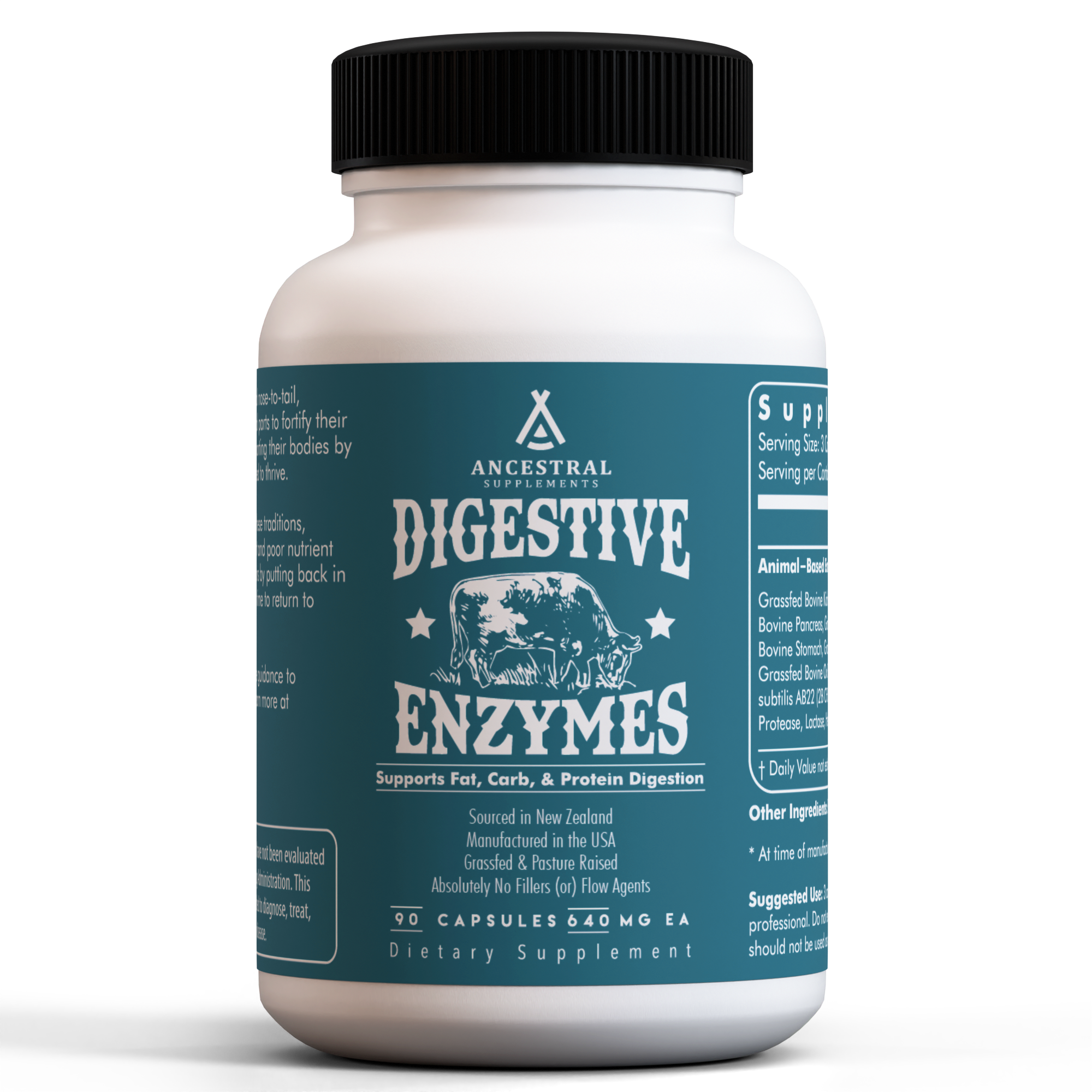
Pancreatic tissue provides enzymes and cofactors involved in digestion and nutrient absorption.
Grass Fed Beef Pancreas is also helpful for promoting healthy blood sugar regulation, which in turn can boost energy stability, metabolic balance, and long-term cellular health.
Across traditional cultures, organ meats were rarely treated as secondary foods. They were prioritized and eaten intentionally, and not just due to scarcity.
Hunters, warriors, and traditional societies consumed organs to support:
Historical evidence even suggests that certain hunter-gatherer populations occasionally prioritized organs and animal fat over muscle meat when resources allowed—because instinctively they knew that organs helped promote better health.
In contrast, organs are less abundant today, in part because they're highly perishable, can be more difficult to find, and are incompatible with industrial supply chains. Over time, organs have mostly vanished from people's plates, although it doesn't have to be this way.
You don't need large quantities of organ meats to reap their benefits.
Organ meats function as nutrient amplifiers, not necessarily staple foods, and they're powerful even in small (but consistent) amounts. The key is not volume, but eating them regularly to boost your micronutrient intake and help support metabolic, immune, and cellular health.
Simple strategies for adding fresh, cooked organ meats to your diet include:
Over time, these small additions can significantly elevate the nutritional quality of your diet without requiring dramatic dietary changes.
While it isn't necessarily difficult to eat organ meats more often, some barriers can make it less likely to happen. These include issues with sourcing, taste preferences, and preparation time.
Desiccated organ supplements, which are dried and encapsulated, provide a practical solution to these problems. Dried organ meats have no taste, don't require any preparation, and therefore have far less friction. And the best part is, they still provide the same nutrients as fresh organ meats.
Grass Fed Beef Organs is an example of comprehensive nose-to-tail nutrition in a single formula. This blend includes:
For anyone looking for simplicity without sacrificing depth, beef organ supplements are one of the best ways to get broad foundational support with little effort.
Synthetic vitamins provide isolated compounds. On the other hand, desiccated organ meats deliver systems of nutrients.
Within organs, vitamins, minerals, peptides, enzymes, and cofactors all exist in synergistic, natural ratios that are shaped by their biological functions.
Whole-food organ supplements provide a mix of nutrients that synthetic isolates simply cannot fully replicate. And that's why they're often superior choices in terms of absorption, utilization, and impact.
Organ meats support virtually everyone, but can be especially valuable for those who:
Ultimately, organ meats are a simple, low-risk dietary upgrade grounded in real food.
Organ meats are not a new health trend. In fact, they're one of the most evolutionarily consistent nutritional food groups in human history.
Our ancestors valued organ meats not because they're full of important nutrients that helped them thrive, adapt, and survive.
Today, in an environment that's defined by calorie abundance but nutrient scarcity, organ meats are still among the most powerful tools for meeting our nutritional needs.

Halloween used to be about costumes, neighbourhood walks, and a little mischief. Now it’s hard to imagine the holiday without heaps of candy at the...

Walk into a grocery store today and you’ll find more choices than any previous generation could have imagined. The average U.S. supermarket carries...

The sun is setting earlier, but your schedule is the same and your to-do list hasn’t gotten any shorter. Despite the drive to hibernate, you still ...

Drinking enough water matters. But hydration involves more than water alone.If you've spent any time in the health world, you've heard it a thousan...


Register to receive a notification when this item comes back in stock.