

Your cart is empty
Explore our premium supplements to support your health and well-being.

Grass-fed organs for energy, hormones, and whole-body health.


Every spring, it happens "like clockwork". The clocks jump forward, and suddenly millions of people wake up feeling strangely off: groggy, foggy, more irritable, and less focused than usual. That’s exactly what happened again this March, when daylight saving time (DST) officially began.
On paper, the change seems small—just one lost hour of sleep. But biologically, your body experiences something very different. That's because your brain and body don't follow the clock on your wall. They follow the sun, which is the main regulator of your circadian rhythm, also called your "internal clock."
When DST suddenly shifts the clock, it creates a mismatch between the light cues your brain expects and the time your alarm goes off. That mismatch disrupts your circadian rhythm, the internal system that controls when you feel awake, when you feel tired, and when your body releases critical hormones like cortisol and melatonin.
The grogginess associated with DST sleep deprivation doesn't last forever, and there are ways to speed up the recovery process.
Let’s look at what’s actually happening inside your body when the clocks change, plus how to recover from daylight savings time more easily and get better sleep using ancestral nutrition and lifestyle practices to bring you back into balance.
Daylight saving time doesn’t create the modern sleep crisis, but it does expose it.
Research shows that more than one-third of adults (35%) don’t get enough sleep, meaning they sleep less than the recommended 7–9 hours per night. Chronic sleep restriction has become normalized, with long work hours, artificial lighting, screens, and late-night stimulation all pushing bedtime later while alarms still ring early.
When DST arrives and removes another hour, for many, it lands on top of an existing sleep deficit, much like withdrawing money from a bank account that was already running low.
Instead of losing just one hour of sleep, you might start feeling like you've missed two or three, and that your brain now really needs time to catch up.
The dangers of sleep deprivation are real. According to the Sleep Foundation, the week following the spring clock transition is associated with measurable changes in many people's health and behaviors, including increases in cardiovascular stress, fatigue, and cognitive impairment.
In other words, clock changes aren't just annoying—they physiologically throw us off in many ways, both emotionally and physically.
The connection between DST and circadian rhythm disruption is why so many people feel exhausted after the clock change.
Your circadian clock lives in a small region of the brain called the suprachiasmatic nucleus, which is located in the hypothalamus (the part that produces many important hormones). This master clock coordinates nearly every daily rhythm that keeps you alive and functioning, including:
The primary signal that keeps your circadian rhythm synchronized is light exposure, especially morning sunlight.
When light enters your eyes in the morning, it communicates to your brain that it should suppress melatonin and raise cortisol levels, which trigger alertness and energy. Later in the evening, darkness signals melatonin production so you can wind down for sleep.
Daylight saving time shifts this pattern, and it does so abruptly. Instead of waking with the sun, many people suddenly wake when it's dark, before their circadian clock is ready, while evening light remains extended later into the night.
The result is a biological lag similar to mild jet lag. Your body clock remains anchored to the sun, while your schedule follows the new clock time.
When circadian rhythms fall out of sync, the effects extend far beyond feeling tired.
In the days immediately following the spring DST shift, researchers have observed increases in:
One widely cited study found a 24% increase in heart attacks on the Monday right after daylight saving time begins, compared to typical rates. Other studies have reported a spike in fatal traffic accidents during the same period and even a slight increase in total mortality (death).
This isn't a coincidence. It's mainly due to sleep deprivation and circadian disruption, which affect nearly every major biological system, especially the brain. Even short-term sleep loss can contribute to:
While some people can adapt to changes in their sleep schedule pretty quickly, for others, it takes longer. Overall, circadian rhythms don’t shift instantly. They move slowly, often adjusting by only about 15 to 30 minutes per day.
That means a one-hour shift can take several days to fully recalibrate. For people with irregular sleep schedules, such as those who sometimes work night shifts or early mornings, the adjustment can take even longer and be even more disruptive.
As mentioned above, circadian rhythms respond to environmental signals (especially light), not clock time. The main factors that influence your internal clock include:
When these cues stay consistent, the circadian clock stays stable. But when the clock shifts suddenly, your internal rhythm remains anchored to the old timing until the environmental signals line up again.
For nearly all of human history, circadian rhythms stayed naturally aligned with the environment. Our ancestors didn’t have alarms, artificial lighting, or different time zones. They woke when the sun rose and wound down after sunset.
Morning light hit their eyes shortly after waking up. When the sun went down at night, activity usually slowed down, which made people feel sleepier. In other words, their biology was synced to the sun, not to clocks.
Daylight saving time represents the ultimate modern mismatch. It literally changes the agreement between the sun and the clock overnight, leaving you fatigued and potentially also struggling to sleep when you "should."
Your lifestyle and daily habits are the foundation for circadian recovery, but nutrition is also involved and can be a powerful tool in regaining your energy.
Many of the nutrients involved in sleep regulation, hormone production, and circadian rhythms are missing in people's diets today. Along with lifestyle changes, natural sleep support supplements can provide nutrients that help stabilize circadian rhythms and improve sleep quality.
Whole-food supplements that are derived from nutrient-dense ancestral foods (also called desiccated supplements) are one convenient way to provide the raw materials your body needs to recalibrate more easily.
The following supplements are among the best for boosting your energy and supporting cognitive performance:
Often called "nature’s multivitamin," beef liver contains a dense supply of nutrients that support circadian biology.
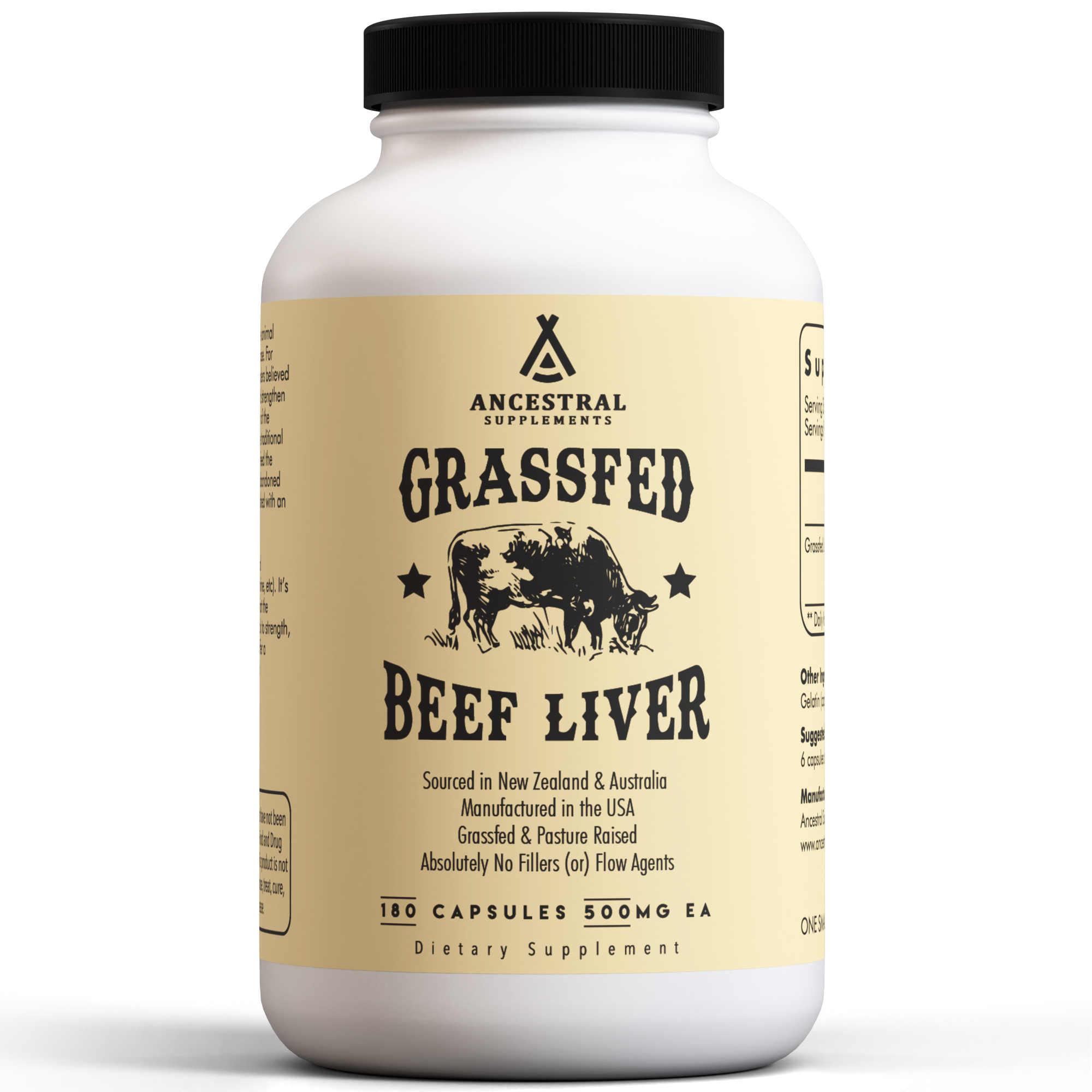
One reason many people turn to dessicated liver supplements is the beef liver sleep benefits, particularly its vitamin A content. Vitamin A helps regulate how light signals are processed by the retina and transmitted to the brain, which plays a role in circadian rhythm signaling.
In addition to vitamin A, our Grass Fed Beef Liver capsules also provide B vitamins, iron, and copper, all of which support energy production and nervous system function during periods of fatigue.
Sleep deprivation often causes brain fog, poor focus, and mood changes. When sleep is disrupted, supporting brain nutrition can help maintain clarity and mental performance.
Grass Fed Beef Brain contains unique lipids, phospholipids, and nutrients that support cognitive function and neurological health.
Supporting mitochondrial health can help counter the fatigue that often accompanies DST transitions.
Grass Fed Beef Heart provides CoQ10, a key compound involved in mitochondrial energy production. Mitochondria generate the cellular energy that fuels every process in the body, including brain function and physical performance.
Because sleep deprivation increases inflammatory stress and cognitive strain, DHA-rich foods can help protect brain health during circadian disruptions.
Our Wild Caught Fish Eggs are rich in DHA omega-3 fatty acids, which support brain function, inflammation balance, and neurological resilience.
The adrenal glands regulate cortisol, including the cortisol awakening response that helps you feel alert in the morning. When circadian rhythms shift abruptly, cortisol timing can become misaligned, leaving mornings feeling unusually sluggish.
Grass Fed Beef Adrenals support provides nutrients that can help support the body’s natural stress and energy response.
Magnesium is one of the most important minerals involved in sleep regulation. It participates in more than 300 enzymatic reactions, including those involved in nervous system relaxation, sleep patterns, and melatonin production.
Yet research suggests that over half of adults don't consume enough magnesium through their diets alone, which is why magnesium for sleep is one of the most widely recommended natural approaches to improving sleep quality.
Ancestral Minerals provides magnesium along with potassium, sodium, and chloride to help with proper hydration, physical performance, recovery, and brain health.
Immune resilience takes a hit when you're missing sleep, which is why Grass Fed Beef Colostrum is helpful, since it provides bioactive compounds like immunoglobulins, growth factors, and peptides that help support gut integrity and immune function.
Grass Fed Beef and Bone Marrow is another smart addition to your routine, since this combination is rich in collagen-building nutrients, healthy fats, and compounds that support cellular repair and recovery that your body uses to restore tissues and maintain resilience.
The same ancestral patterns that regulated circadian rhythms thousands of years ago still work today. You simply have to provide them again.
The fastest way to recover from daylight saving time is to reinforce the environmental cues your circadian clock depends on. These signals help your brain shift its internal timing to match the new clock schedule. Here's how to do it:
Morning light is the most powerful circadian reset signal available.
Within 30 to 60 minutes of waking, try to spend at least 5 to 15 minutes outside in natural sunlight. This tells your brain that the day has begun and helps reset the cortisol awakening response.
Even cloudy daylight is significantly stronger than indoor lighting. But if going outdoors isn't an option, open up your blinds and let in as much natural light as possible.
After the DST shift, try to maintain the same sleep and wake schedule every day for the next week or two, even on weekends. Do your best to go to sleep and wake up at about the same time.
Even if you feel tired earlier or later than usual, sticking to a predictable rhythm helps your circadian clock stabilize faster.
Your body temperature naturally drops as your brain prepares for sleep. A slightly cooler bedroom, generally between 60 and 67 degrees Fahrenheit, helps reinforce that nighttime temp drop and often improves sleep quality.
DST pushes evening light later into the day. Screens amplify the problem by emitting blue wavelengths that suppress melatonin production, which is the hormone that normally would make you feel tired.
Limiting screens (including your TV, phone, and tablet) during the hour or two before bed, or using blue light–blocking glasses and filters on your devices, can help restore a healthier nighttime rhythm.
Getting outdoors into nature can help realign your circadian rhythm. Sunlight, fresh air, natural movement, and even direct contact with the ground are all helpful for supporting nervous system balance and recovery from circadian stress.
Daylight saving time might only shift the clock by an hour, but it represents a much bigger disruption to your health and mood, especially for people who were already sleep-deprived.
If changes to your sleep seem to really throw you off, you're not weak; you're just noticing the effects that sleep deprivation has on your nervous system.
Fortunately, circadian rhythms are very adaptable when given the right inputs.
Morning sunlight, consistent sleep patterns, cool and dark evenings, and nutrient-dense ancestral foods all support a healthier circadian rhythm reset.
If fatigue, brain fog, or hormonal stress hit especially hard this week, consider starting with one or two targeted supplements and combining them with morning sunlight and better nighttime habits. Many people begin with:

The sun is setting earlier, but your schedule is the same and your to-do list hasn’t gotten any shorter. Despite the drive to hibernate, you still ...

Drinking enough water matters. But hydration involves more than water alone.If you've spent any time in the health world, you've heard it a thousan...

If you've spent any time in the health world, you've probably heard wildly different opinions about fasting.Some experts warn that skipping meals c...

Every spring, millions of people declare war on their bodies. They cut calories, double their cardio, skip meals, and promise this time they’ll fin...


Register to receive a notification when this item comes back in stock.