

Your cart is empty
Explore our premium supplements to support your health and well-being.

Grass-fed organs for energy, hormones, and whole-body health.


If you've spent any time in the health world, you've probably heard wildly different opinions about fasting.
Some experts warn that skipping meals can slow your metabolism, increase stress on your body, eat away at hard-earned muscle, or worsen your relationship with food. Others praise fasting as a powerful tool for supporting fat loss, metabolic health, mental clarity, and healthy aging. So, who's right?
The truth is that fasting isn't a one-size-fits-all strategy. It's not necessarily appropriate for everyone, but for many generally healthy adults, intentional periods without food can be a safe and effective way to support overall health.
As with most nutrition topics, context matters. The potential benefits of fasting depend on factors like your current health status, lifestyle, stress levels, and how fasting is implemented.
Let's explore what actually happens in the body during a 24 to 48 hour fast, the potential benefits and limitations of this practice, who may benefit most, and how to incorporate fasting into your routine in a way that feels sustainable.
Fasting is the intentional avoidance of food and most beverages for a defined period of time.
Despite its recent surge in popularity, fasting is anything but new. In fact, it's one of the oldest eating patterns humans have ever practiced.
Before there were refrigerators, drive-thrus, and around-the-clock access to snacks, our ancestors experienced natural cycles of feeding and fasting. Food availability shifted with the seasons, hunting success, travel, and environmental conditions. Periods without food weren't considered extreme. They were simply part of life.
Today, many people eat from the moment they wake up until just before bed. Constant access to ultra-processed, calorie-dense foods means we're living in a metabolic environment that's dramatically different from the one our bodies evolved to navigate.
That's one reason researchers have become increasingly interested in fasting as a way to reconnect with biological rhythms that support metabolic health.
There are a few common approaches to fasting, some of which are more challenging than others:
This involves eating all of your daily calories within a specific window of time. For example, a 16:8 schedule includes 16 hours of fasting and an 8-hour eating window.
Interestingly, many people naturally practiced this decades ago. In the 1970s, it was common to eat breakfast, lunch, and dinner without frequent snacking, which created a 12–14-hour overnight fast even when it wasn't an intentional fast.
Intermittent fasting generally refers to structured fasting periods throughout the week.
One popular approach is the 5:2 method, where people eat normally five days per week and significantly reduce calorie intake (to about 500 calories) on two non-consecutive days.
These fasts can extend beyond 24 to 48 hours, such as up to 10 days in some cases. Longer fasts can be safe, but they should be approached carefully, especially by anyone with underlying health conditions.
For most people, shorter fasting windows offer many of the benefits associated with fasting while being easier to sustain long-term.
For roughly 99% of human history, people lived as hunter-gatherers. Meals weren't scheduled around habits, meetings, and school pickups. Food availability depended on factors like weather, migration patterns, seasonal plant growth, and hunting success.
This meant that periods without food were normal. As a result, humans developed an incredible ability to store energy during times of abundance. They were able to tap into those reserves when food became scarce.
In other words, your body was designed to function in both the fed and fasted states.
After eating, you primarily rely on glucose (from carbohydrates) for energy.
But after approximately 12–16 hours without calories, something interesting happens. As stored glycogen begins to decline, you begin using stored fat (including body fat) for fuel instead. This process produces molecules called ketones, which can serve as an alternative energy source, including for your brain.
Many people who are producing more ketones than normal and are in the metabolic state of "ketosis" report experiencing:
This ability to efficiently switch between fuel sources is known as metabolic flexibility.
Unfortunately, modern eating habits tend to limit our opportunities to develop this skill. And that's why fasting is usually intentional and takes effort and discipline to follow through with.
Every time we eat carbohydrates, our pancreas releases insulin. Insulin acts like a key, helping glucose to move from the bloodstream into cells where it can be used for energy.
However, frequent eating, especially frequent intake of highly processed and sugary foods, can contribute to insulin resistance over time.
During fasting periods, insulin levels naturally decline. Research suggests that fasting is capable of improving insulin sensitivity, allowing the body to respond more efficiently to this important hormone.
This doesn't mean carbohydrates are inherently harmful, but that periodic breaks from constant eating can provide valuable metabolic benefits, especially for anyone who's already struggling with their metabolic health.
When your body isn't focused on digesting food, it can devote more energy toward maintenance and repair, including the process known as autophagy.
Autophagy literally means "self-eating," but don't let the name scare you. It's a normal cellular process that helps remove damaged proteins and worn-out cellular components.
While researchers are still learning exactly how fasting influences autophagy in humans, fasting appears to help activate many of the body's natural repair pathways and contribute to healthy aging and cellular resilience.
For example, scientists believe it may be able to protect against age-related cognitive decline by helping to clear damaged proteins and cellular debris that can accumulate in the brain with increased age. However, more human studies are needed to better understand this relationship.
Inflammation is a normal part of healing. However, chronic, low-grade inflammation often contributes to issues like fatigue, brain fog, joint discomfort, and increased disease risk.
Studies suggest fasting can support a healthy inflammatory response and help reduce oxidative stress. Many people also notice improved mental clarity during fasting periods, potentially related to ketone production and more stable blood sugar levels.
And in addition to supporting weight management, fasting has been associated with improvements in several markers of cardiometabolic health, including blood pressure, triglycerides, LDL cholesterol, and insulin sensitivity, particularly among those who are overweight or obese.
While everyone's experience is different, this helps to explain why fasting has remained part of many traditional wellness practices for centuries. For example, fasting is incorporated into observances such as Ramadan in Islam, Lent in Christianity, Yom Kippur in Judaism, and certain practices within Buddhism and Hinduism.
While these traditions emphasize reflection, discipline, and renewal rather than metabolic health, they reflect a shared understanding across cultures that temporary pauses in eating can serve a meaningful purpose, including for both physical and mental wellbeing.
Have you ever felt hungry shortly after eating? That might be because you didn't eat enough, ate a combination of nutrients that didn't fill you up, or due to hormonal reasons, or even emotional triggers.
Hormones like ghrelin and leptin help regulate your appetite. Ghrelin (one of your main "hunger hormones") stimulates hunger, while leptin communicates feelings of fullness.
Frequent snacking and highly palatable foods can disrupt the release of these hormones, and that can lead to ongoing cravings and an appetite that's hard to regulate. The more processed foods you eat, the more these hormones tend to be out of balance.
Many people today have also developed a fear of feeling hungry at all.
To be fair, hunger is a biological signal designed to motivate us to seek food and ensure survival. But in a modern environment where food is available 24/7, we've lost touch with the difference between true physiological hunger and eating out of habit, boredom, stress, or simply because the clock says it's time for a meal.
By creating intentional periods between meals, fasting may help rebuild confidence in your body's ability to tolerate mild hunger and tap into stored energy when appropriate.
With practice, many people who fast find that hunger becomes less urgent and more predictable rather than something that constantly drives their decisions around food.
While in the beginning, fasting might make you more sensitive to food cues and, those who incorporate time-restricted eating into their routine over time tend to report:
Instead of constantly asking, "When can I eat next?" fasting can help you reconnect with your body's internal hunger and fullness cues.
Something that many people wonder is whether fasting is superior to simply eating fewer calories.
The answer: It depends. When calories are matched between fasting and dieting, both approaches can support weight loss.
However, some find fasting easier to sustain because it creates clearer boundaries around eating. For instance, it can help put an end to late-night snacking and eating mindlessly out of habit.
From an ancestral perspective, fasting so that you eat in a way that aligns with natural light and dark cycles can support optimal metabolic function. Studies suggest that front-loading calories earlier in the day while reducing late-night eating may benefit glucose regulation, sleep, and overall cardiometabolic health. However, what you eat remains just as important as when you eat.
Fasting also offers some unique benefits related to metabolic flexibility and cellular repair that extend beyond calorie reduction alone.
Ultimately, the best approach is the one you can maintain consistently that helps you fuel your body without feeling deprived or preoccupied with food.
If you're interested in experimenting with fasting, it's best to start with an easier approach than to jump into extended fasts.
Try a simple 12-hour overnight fast by finishing dinner at 8 p.m. and eating breakfast at 8 a.m.
If that feels comfortable, you might gradually extend your fasting window to 14 or 16 hours.
A few additional tips to help you get the most from fasting:
While fasting focuses on what happens between meals, what you eat during your feeding window matters just as much.
Nutrient-dense ancestral foods and food-derived supplements can help support your energy, recovery, and overall health while you fast.
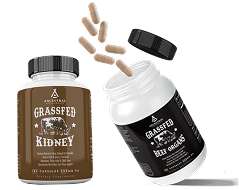
Products like Ancestral Supplements Grass Fed Beef Organs—which contains grass-fed liver, heart, pancreas, kidney, and spleen— provides a convenient source of bioavailable nutrients, such as iron, B vitamins, vitamin A, and digestive enzymes.
Organ meats are full of vitamins, minerals, peptides, and cofactors that support everything from energy production and immune function to helping to counteract common nutrient deficiencies. They can be a valuable addition to a nutrient-dense diet when practicing fasting, as they help to maximize nutrient intake during your eating window.
Grass Fed Beef Colostrum is another way to support gut and immune health, particularly during periods of dietary change, which can affect your gut.
Colostrum, sometimes called "liquid gold," is uniquely rich in immunoglobulins, growth factors, and other bioactive compounds that help support the integrity of the gut lining and a healthy immune response. Many people also use it to support digestion, recovery, and overall resilience.
Grass Fed Beef Bone and Marrow is another great addition, as it offers nourishing fatty acids and naturally occurring compounds that support connective tissues, promote satiety, and can help make it easier to stay in ketosis while fasting.
Humans evolved in an environment defined by cycles of feast and famine. Our bodies developed sophisticated mechanisms to adapt to both states.
Fasting can reactivate some of these ancient pathways by supporting metabolic flexibility, insulin sensitivity, cellular repair, and appetite regulation.
For many people, simply creating more intentional space between meals may be enough to reconnect with a pattern that has shaped human biology for thousands of years.
Individual results may vary and are not guaranteed. Always consult with your doctor before starting any new supplement, diet, or exercise program, especially if you have any pre-existing medical conditions.

Halloween used to be about costumes, neighbourhood walks, and a little mischief. Now it’s hard to imagine the holiday without heaps of candy at the...

Walk into a grocery store today and you’ll find more choices than any previous generation could have imagined. The average U.S. supermarket carries...

The sun is setting earlier, but your schedule is the same and your to-do list hasn’t gotten any shorter. Despite the drive to hibernate, you still ...

Drinking enough water matters. But hydration involves more than water alone.If you've spent any time in the health world, you've heard it a thousan...


Register to receive a notification when this item comes back in stock.