

Your cart is empty
Explore our premium supplements to support your health and well-being.

Grass-fed organs for energy, hormones, and whole-body health.



During holiday meals like Thanksgiving or Christmas, a turkey or roast takes center stage. We then plan the sides, stuffing, gravy and dessert. But what about that small packet tucked inside the turkey? We usually just throw it away.
That packet has a name: giblets. It usually includes the heart, liver, and gizzard, sometimes with the neck. There’s a reason these parts are still included with the holiday bird. They bring valuable nutrients, rich flavors, and opportunities to make more of the meal. For generations, home cooks knew exactly what to do with them. But somewhere along the way, much of that knowledge was lost. Today, even our parents' generation may be unfamiliar with how to put these overlooked parts to good use.
Today, we might save the bones for broth. We may even use the pan drippings. But the organs are more likely to be discarded or left behind at the butcher. It's time to revisit that wisdom, explore why these humble organs deserve a place at the table, and rediscover a few ways to prepare and enjoy them.
Organ meats have distinctive flavors that can be bold, earthy, or mineral-rich. While these qualities may be unfamiliar to some, they can also bring richness and depth to a variety of dishes, allowing you to enjoy their benefits without having to eat them on their own.
Each organ has its own character and qualities and we can choose a preparation that suits each cut. Beef heart, for example, is lean and firm, with a flavor closer to a lean steak than many people expect. It can be sliced thin, marinated, quickly seared, or braised until tender.
Liver is soft and robust, and pairs naturally with sweet browned onions, butter, herbs and something bright like lemon or vinegar. It is best browned with onions and finished with a splash of vinegar or finely chopped and stirred into gravy, stuffing, meatballs, or a meat sauce.
Kidney has a more distinctive flavour and is often slow-cooked in a pie or stew. Tongue, though less commonly thought of as an organ meat, becomes tender and mild when braised and is easy to slice for many different dishes. Sometimes including these cuts into your dish actually makes them more complete from both a flavor and nutrition standpoint.
Organ meats are among the most nutrient-dense foods we can eat, offering an impressive variety of vitamins, minerals, protein, and other beneficial compounds. A 2024 analysis of raw U.S. beef offal examined the nutritional composition of beef heart, liver, kidney, tongue, tripe, oxtail, and bone marrow. While the researchers identified a wide range of essential nutrients, their analysis did not capture every beneficial compound these foods contain. Together with other nutritional research, the findings help illustrate what these often-overlooked cuts bring to the table.
Heart — A source of protein, B vitamins, iron, zinc, and copper. Heart also naturally contains coenzyme Q10 (CoQ10), a compound involved in cellular energy production, as well as taurine.
Liver — One of the most nutrient-dense cuts, particularly rich in preformed vitamin A (retinol), vitamin B12, riboflavin, copper, and iron. It also provides folate, niacin, vitamin B6, phosphorus, and zinc.
Kidney — Particularly rich in vitamin B12 and riboflavin, along with selenium, iron, zinc, copper, phosphorus, and other B vitamins.
Tongue — Provides protein, fat, vitamin B12, riboflavin, niacin, vitamin B6, iron, phosphorus, and zinc.
Tripe — A source of protein, with smaller contributions of fat, calcium, and iron.
Oxtail — Provides protein, fat, iron, zinc, and phosphorus. Its connective tissue also makes it particularly useful for preparing rich stocks and slow-cooked dishes.
Bone marrow — Primarily a source of fat and concentrated energy, along with calcium and phosphorus.
These nutrients serve important roles throughout the body. B vitamins help convert food into energy and support nervous system function. Iron contributes to oxygen transport, zinc supports immune function, and vitamin A is essential for vision, immunity, and healthy tissues. Copper, selenium, and phosphorus also contribute to important metabolic and cellular processes.
Bringing organs back to the holiday table is about more than making use of the whole animal. It's an opportunity to add nutritional variety, rich flavors, and traditional foods that have largely disappeared from modern meals. Even incorporating a small amount into familiar holiday recipes can be a meaningful way to reconnect with this nose-to-tail approach to eating.
If you want to try to boost the nutrient density of your holiday meal, the easiest place to start is with the giblets that already come with your turkey or chicken. They can turn the drippings into a more savory gravy, and the chopped meat can go into stuffing or a pot of soup. If the packet is still frozen, thaw it in the refrigerator.
This makes about 2 cups, enough for a holiday meal of six to eight.
You’ll need:
Giblets from one turkey or chicken (heart, liver, and gizzard; add the neck if it is in the packet)
2 cups chicken or turkey stock, plus more as needed
½ cup diced onion
½ cup diced carrot
½ cup diced celery
2 cloves garlic, minced
2 tablespoons butter or turkey drippings
2 tablespoons flour
Salt and pepper
Optional: a little chopped parsley, thyme, or sage
How to make it:
In a saucepan with some butter, brown the giblets on all sides.
Add onion, carrot and celery and saute until onion is translucent (3-5 mins)
Add garlic and saute another minute.
Add stock. Simmer gently for a few hours while the turkey cooks. Add the liver near the end so it does not become tough.
Remove the giblets and neck. Remove any meat from the neck, then finely chop the meat and giblets. Strain and keep the rest of the cooking liquid.
Melt the butter or take your pan drippings in a saucepan. Whisk in the flour and cook for about a minute. Slowly whisk in the reserved liquid and any turkey pan drippings. Simmer until smooth and thickened, adding more stock if needed.
Stir in the chopped meat and herbs. Taste before adding salt.
For smoother gravy, purée with an immersion blender.
For a gentler first taste, use only half the liver and save the rest for stuffing or freeze it for another meal.
Liver can have a strong flavor on its own, so try it first in a dish where browned onions, herbs, and a little acidity can complement it. For a simple skillet, slice 225 g (½ lb) beef liver thinly and season it. Brown it in butter over medium-high heat. Set it aside while you cook one sliced onion in the same pan until soft and browned. Return the liver briefly, add a splash of cider vinegar or lemon juice, and serve with potatoes or toast. If you prefer a milder flavor, soak the slices in milk for at least 30 minutes in the refrigerator, then pat them dry before cooking.
Another low-pressure and simple option is to finely chop or grate a small amount of beef liver into ground beef. Start with about 1 part liver to 9 parts beef in meatballs, burgers, or a meat sauce; you can adjust the proportions to your taste. A short time in the freezer firms the liver and makes it easier to cut or grate.
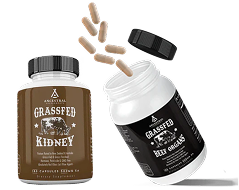
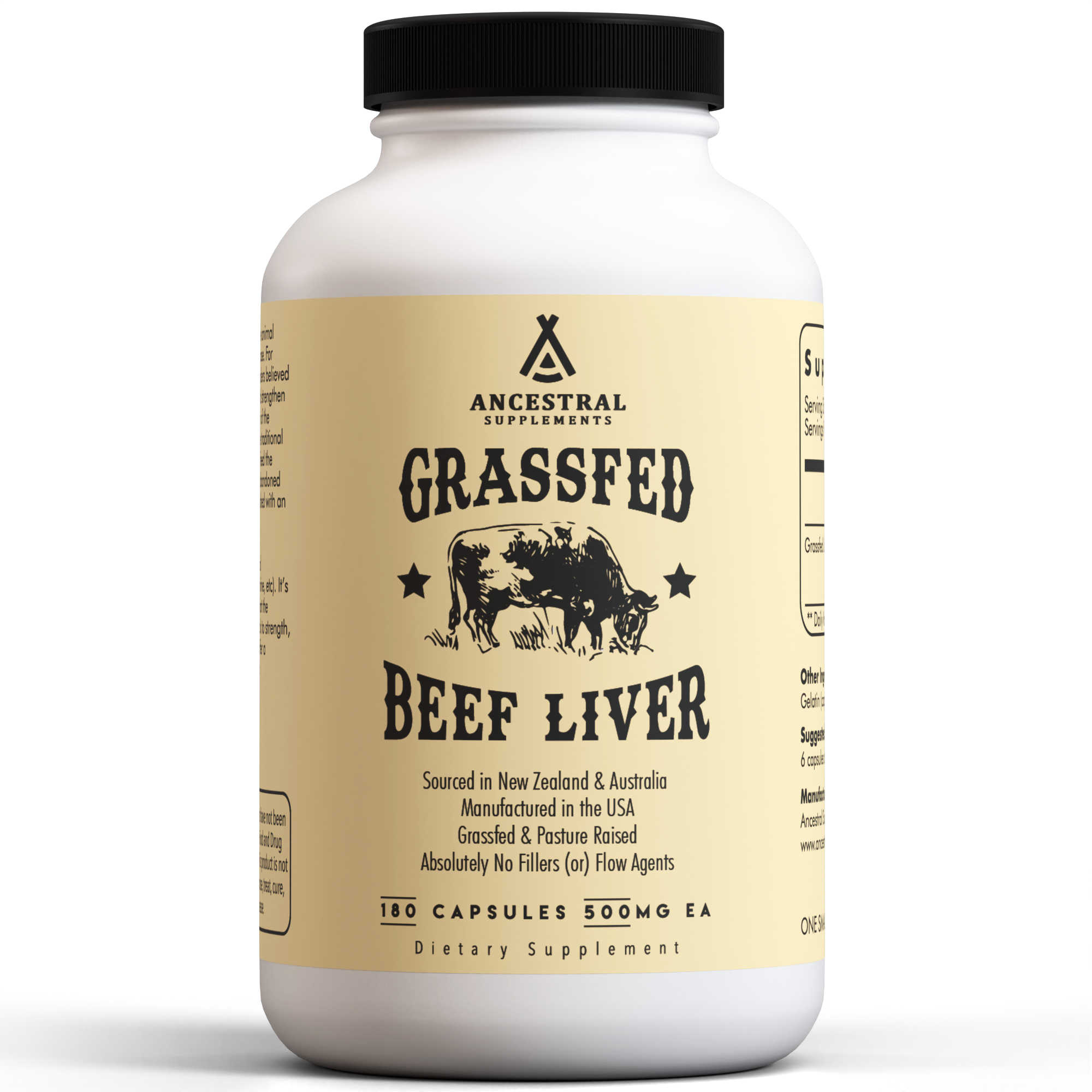
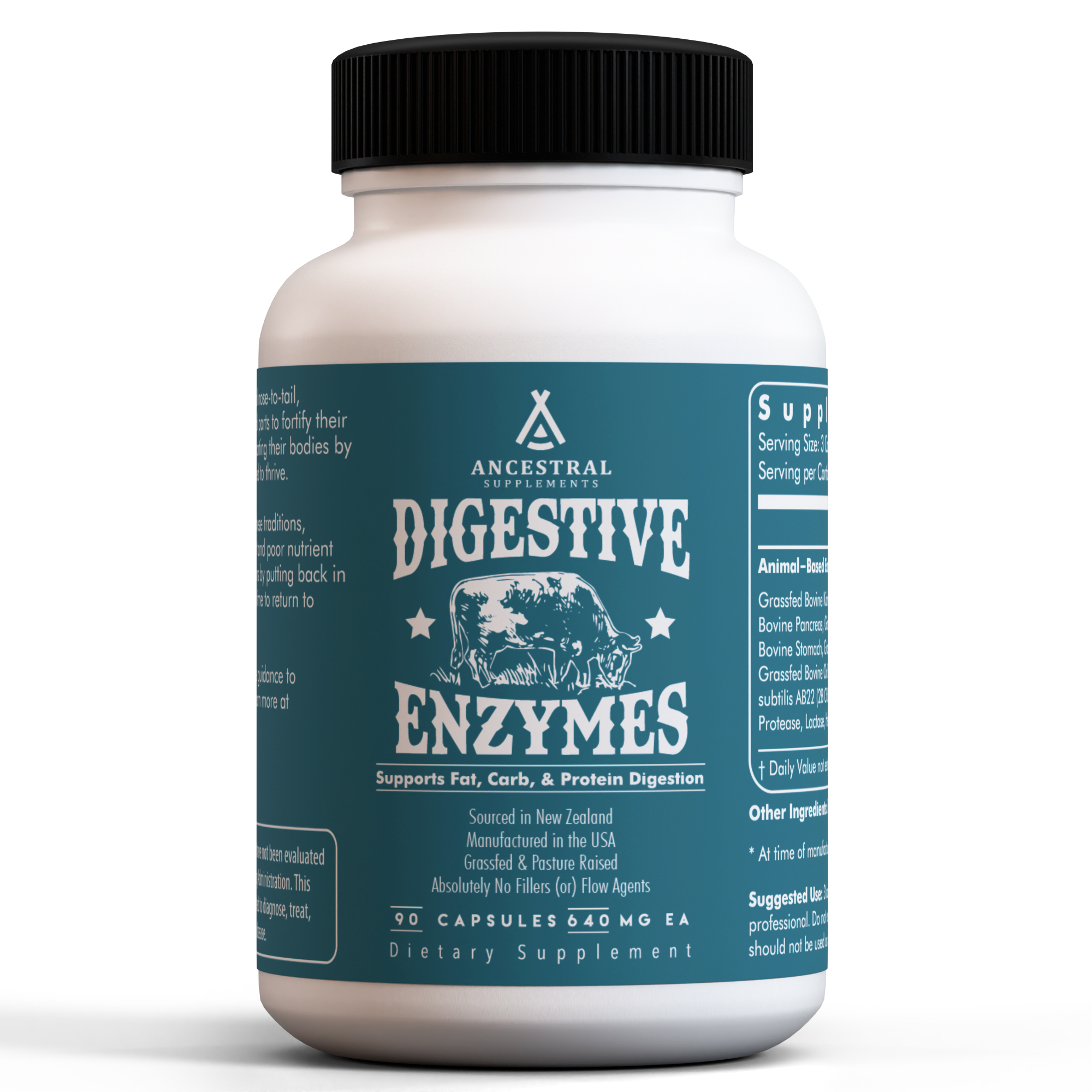
If you’d rather skip preparing liver altogether, Ancestral Supplements Grass Fed Beef Liver offers a convenient daily option in capsule form.
Ask a butcher to trim beef heart, or remove the tough outer membrane and firm connective tissue yourself. Cut it into thin slices across the grain, then season or marinate it with oil, garlic, herbs, and a little vinegar or lemon. A hot pan and a quick sear keep thin slices tender. Heart is lean, so avoid cooking it for a long time unless you are braising it slowly in liquid. It is excellent grilled like a steak, as kebabs or fajitas, stir-fry, a slow braise or ground into burgers or sausage. Leftovers are good sliced cold in a sandwich or warmed into a hash.
For readers who don’t enjoy eating heart, Ancestral Supplements Grass Fed Beef Heart is another way to include it without cooking it yourself.
Nose-to-tail cooking is a simple idea: when an animal provides food, use as much of it as you can. That includes organs, bones, fat, and connective tissue. It is a way to cook with care and resourcefulness. It also brings more of the animal’s distinct flavors and nutrients into the kitchen.
This holiday season, we invite you to bring back this ancestral wisdom to your kitchen. Start with the giblets that came with the turkey. Simmer them for gravy, fold chopped meat into stuffing, or save them in the freezer until you have enough for another dish.
The holidays are a season of abundance. Nose-to-tail cooking helps make that abundance count by using more of the animal and bringing its nutrient-dense organs to the table. Organ meats add rich flavor to the meal, and remind us that a feast can be generous without leaving so much behind.

Generations ago, the roast was only the beginning. After it was carved, the bones went back into the kitchen. Cooks added water, perhaps a few herb...

Halloween used to be about costumes, neighbourhood walks, and a little mischief. Now it’s hard to imagine the holiday without heaps of candy at the...

Walk into a grocery store today and you’ll find more choices than any previous generation could have imagined. The average U.S. supermarket carries...

The sun is setting earlier, but your schedule is the same and your to-do list hasn’t gotten any shorter. Despite the drive to hibernate, you still ...

Drinking enough water matters. But hydration involves more than water alone.If you've spent any time in the health world, you've heard it a thousan...


Register to receive a notification when this item comes back in stock.