

Your cart is empty
Explore our premium supplements to support your health and well-being.

Grass-fed organs for energy, hormones, and whole-body health.



Walk into a grocery store today and you’ll find more choices than any previous generation could have imagined. The average U.S. supermarket carries more than 33,000 items. For someone who once grew, raised, gathered or hunted their food, walking through its doors would be an extraordinary experience.
Some of the food would be familiar: beef, eggs, fish, apples, potatoes. Other products would require a serious explanation. Breakfast cereal. Brightly coloured sports drinks. Snack cakes with added protein.
They might marvel at how much food we have, then wonder why so much of it barely resembles food at all.
Now we have access to food from around the world, year-round. Yet much of our diet comes from products far removed from the animals and plants that supplied their ingredients. Convenience has expanded our choices while making it remarkably easy to eat more than we need.
In a controlled NIH trial, 20 adults received an ultra-processed diet and an unprocessed diet for two weeks each. They could eat as much or as little as they wanted. During the ultra-processed phase, they consumed about 500 additional calories per day and gained roughly two pounds. During the unprocessed phase, they lost about two pounds.
This study was short, but it demonstrated something worth considering before your next grocery trip: changing the food we eat may influence how much we eat.
That’s why one of our core tenets here at Ancestral Supplements is EAT (like our ancestors). It guides us toward nutrient-dense whole foods, with an emphasis on nose-to-tail eating: meat, organs, marrow, and the nourishing parts of an animal that modern diets so often leave out.
Our ancestors didn’t share one universal diet. Geography, season and culture shaped what was available. Still, their dependence on recognizable foods offers a useful starting point for navigating a store filled with products computing for our finite and precious attention. This grocery list puts that philosophy into practice.
Here’s what deserves a place in the cart.
Beef, bison, lamb, pork, poultry, and other meats would be easy to recognize. A roast, a whole chicken, or a pack of ground beef is a great starting point for many meals. There is also something refreshing about buying food whose identity is clear. Beef doesn’t need a front-of-package protein claim to explain what it brings to your dinner.
Our ancestors saw value in the whole animal, and their cart would reflect that. Beyond steaks and boneless chicken breasts, an ancestral cart would include tougher cuts for slow cooking, bones for broth, or a whole bird rather than a tray of individual pieces.
Using more of the animal makes practical sense. When schedules are full and every spare minute feels like a gift, ingredients that carry you through several meals are worth bringing home. A roast can become dinner, then leftovers. The bones can make broths and soups. A whole chicken provides meat for several meals and its carcass can go into the stockpot. Ground beef can become burgers, meatballs, or a skillet meal without requiring an elaborate recipe.
Choose the cuts you enjoy and can afford. When possible, ask how the animals were raised and buy from farmers or ranchers whose practices you understand. An ancestral grocery list becomes more meaningful when you know something about the food’s origins.
An ancestral shopper might be more puzzled by our reluctance to eat liver than by the liver itself.
Today, we’re more comfortable eating brightly coloured snacks from a bag, yet many of us hesitate at a food that was once an ordinary part of preparing an animal.
Organs barely register in the modern American diet. In a 2022 analysis of U.S. dietary data, liver and organ meats accounted for just 0.3% of red and processed meat intake by weight. Liver, heart, kidney and other organs have become unfamiliar enough that shoppers don’t know where to find them, much less how to cook them. We’ve largely stopped eating them, even though they have so much nutrition to offer us. Many grocery carts include muscle meat but leave out liver, heart, kidney, and other organs.
Liver, for example, provides nutrients including vitamin A, vitamin B12, iron and copper. According to the National Institutes of Health, three ounces of cooked beef liver contains nearly 30 times the recommended daily intake of vitamin B12 (about 70.7 micrograms), which helps your body make red blood cells and supports healthy nerve function.
Organs add variety to the animal foods already on your plate. Liver, heart and kidney each have a different nutrient profile, so relying on familiar muscle meats alone leaves out more than a different flavor.
That being said, you don’t have to start with a full plate of liver. Start with something manageable like a small amount mixed into ground beef for meatballs or chili. Slice and cook a little heart alongside a familiar cut like steak. Ask your local butcher what’s available and how they like to prepare it.
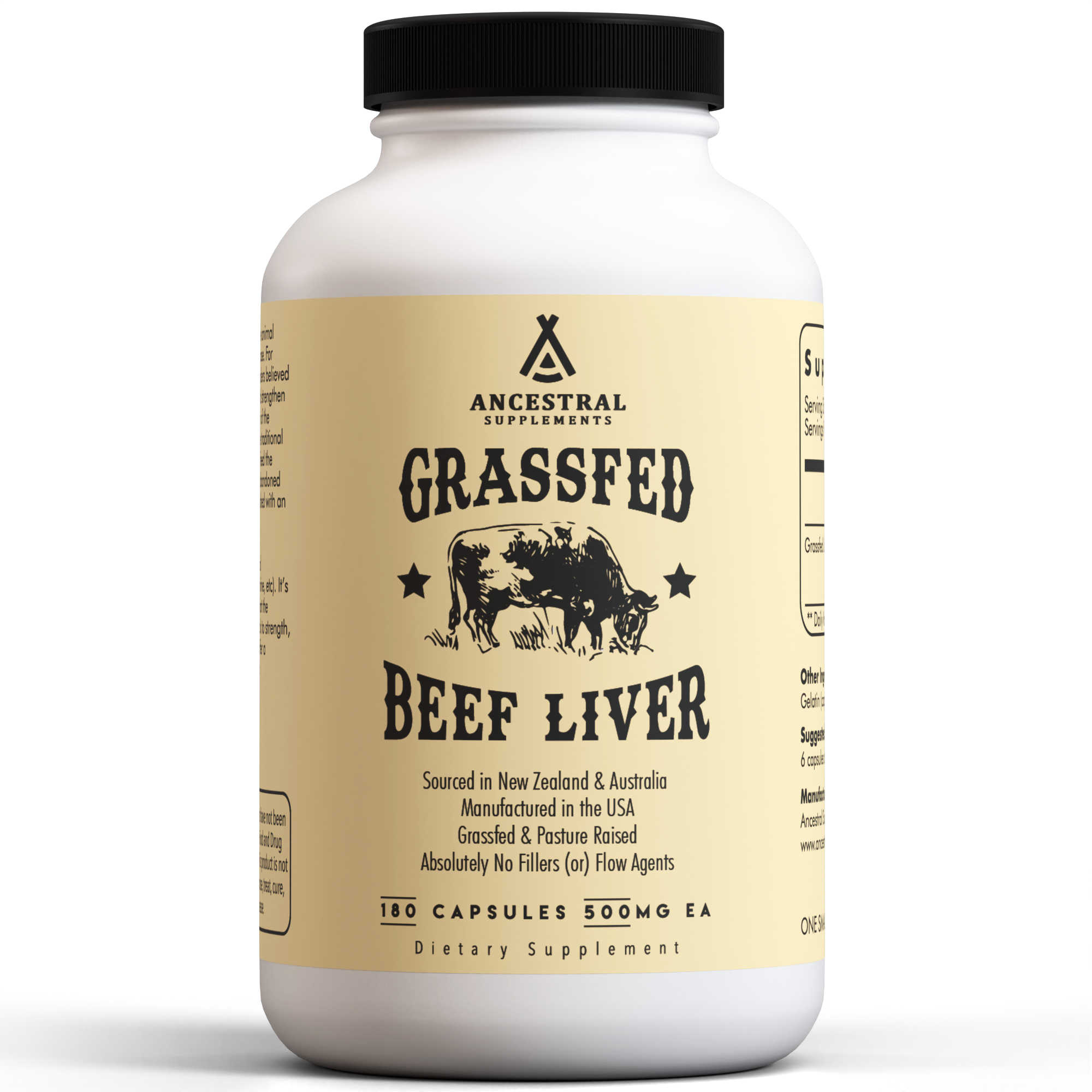
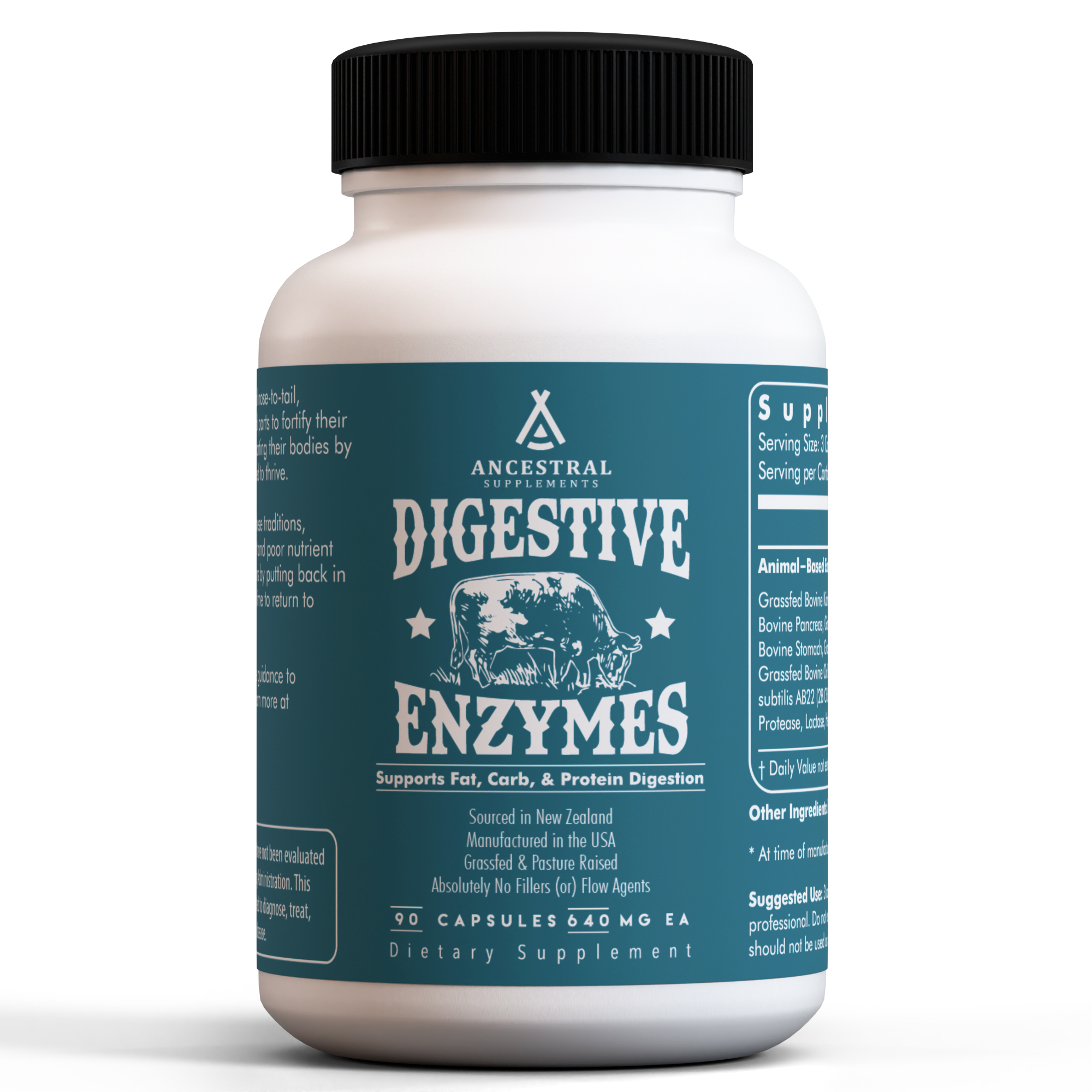
For those who don’t enjoy the taste or can’t source them regularly, encapsulated freeze-dried options such as Ancestral Supplements Grass Fed Beef Liver make these overlooked foods more convenient to include alongside nutrient-dense meals.
Depending on where people lived, seafood could be an important part of a traditional diet. For communities with access to rivers, lakes, and coastlines, seafood offered a huge source of nourishment. Fish and shellfish can bring nutritional variety to a week that might otherwise revolve around land animals only.
Fresh fish is one option, but frozen and canned seafood can be just as useful for planning meals and often more affordable. Canned salmon, sardines, oysters, and mussels are easy to keep on hand.
For example, the soft bones in canned salmon and sardines are edible sources of calcium. Eating them is a simple way to use more of the fish while adding a nutrient that helps maintain bones. The NIH calcium guide lists both canned sardines and salmon with bones as nondairy calcium sources.
Choose what’s available, affordable, and likely to get eaten in your household. A can of salmon you’ll turn into lunch is more useful than a beautiful piece of fresh fish that goes untouched in the fridge.
Eggs earn their place because they are so versatile and affordable. They don’t have to be relegated to a breakfast food. Scramble them with leftover meat and vegetables, boil a few for busy days, or use them to turn odds and ends into a meal.
They also provide choline, a nutrient your body uses to build cell membranes and make acetylcholine, a chemical involved in memory and muscle control. One large hard-boiled egg contains about 147 milligrams of choline, or roughly 27% of the Daily Value. Most U.S. adults consume less than the recommended adequate intake.
Dairy depends more on individual preference and tolerance. It wasn’t part of every traditional diet, but milk, plain yogurt, kefir, and cheese can be useful foods for those who enjoy them.
You don’t need to make every choice at this stop complicated. Choose versions that fit the meals you’re making. Plain yogurt works with fruit at breakfast or with herbs as a savory sauce. Cheese can round out an omelet or become part of a simple lunch.
These are ordinary foods, which is part of their appeal. You don’t need a new product category for every nutritional need.
The produce aisle can make every season look like summer. But that year-round selection often comes from far away. In 2023, imports supplied 59% of the fresh fruit and 35% of the fresh vegetables available in the United States. That gives us plenty of choice, but it also means what’s on the shelf may have little connection to what’s growing nearby. Produce that has to travel long distances is often picked before it’s fully ripe so it can withstand the trip. Buying locally and in-season can mean produce has more time to ripen on the plant before it reaches your kitchen.
In summer, that might mean berries, tomatoes, greens, and fresh herbs. In colder months, it might look more like cabbage, carrots, potatoes, squash, onions, and apples. These foods can turn meat and eggs into complete, appealing meals.
There’s no need to insist that every vegetable be fresh. Frozen berries and vegetables make it easier to eat a variety of plants when the growing season is short or the week is busy.
Frozen doesn’t automatically mean less nutritious. In a study comparing eight fruits and vegetables, researchers measured minerals, fiber, and plant compounds called phenolics. For most of the foods, they found no significant differences between fresh and frozen versions in those measures. Results varied by food, but freezing did not consistently make the produce nutritionally inferior.
Fermented vegetables, such as sauerkraut, kimchi, and naturally fermented pickles, carry on a long tradition of food preservation and can support gut health in addition to shelf-stable nutrients.
Instead of buying a little of everything, choose plants with a plan. A cabbage can go into a skillet with ground beef and then become a slaw later in the week. Carrots and onions can cook alongside a roast. Berries can go on yogurt or be eaten as they are.
That’s a more useful grocery strategy than filling the produce drawer with good intentions.
One of the most underrated ways to get your family to love whole foods is learning how to season them. Fat, salt, acidity, and a little sweetness can help bring a meal into balance. Butter or oil adds richness, salt brings out flavor, vinegar or lemon cuts through a fatty dish or cut of meat, and fruit can soften something tart. These are the details that can make simple food delicious and learning how to use these well can turn “eat your vegetables” into “can we have this again?”
Fat also helps your body absorb vitamins A, D, E, and K, along with plant pigments such as beta-carotene. Olive oil on a salad or butter with carrots can improve the absorption of some of the nutrients and contribute to more flavour of foods already on your plate.
Keep butter, tallow, olive oil and a high-quality salt on hand along with garlic, herbs, spices, and vinegar. These staples give you plenty of ways to cook what’s in your cart and make them delicious every single time.
This is where the modern food supply deserves more scrutiny.
A 2019 study examining more than 230,000 U.S. packaged foods and drinks classified about 71% as ultra-processed.
These products occupy a substantial share of our diets. CDC data from 2021–2023 show that ultra-processed foods supplied 53% of adults’ calories and 61.9% of children’s and teens’ calories. They have become everyday staples.
The NIH feeding trial showed that an ultra-processed dietary pattern could increase calorie intake and weight even when participants were free to decide how much to eat. Against that backdrop, telling people to “just eat less” leaves an important part of the conversation unfinished.
A protein claim on a sweet snack doesn’t resolve that problem. Neither does a reassuring word such as “natural.” The front of the package is making a sales pitch; the ingredient list gives you more information about what you’re buying.
Processing can make food safer, more accessible, and easier to store. There are useful staples in the middle aisles of the grocery store, including canned fish, olive oil, dried herbs, and simple preserved foods. Look at what the product contains and the role it plays in your diet.
Building meals around meat, eggs, seafood, organs, and seasonal produce gives those foods more room to replace the snacks and drinks that have become habitual purchases.
Here’s one possible cart for a week. Adjust the amounts for your household, your budget, and the meals you plan to make.
Now turn the list into meals: ground beef with cabbage and potatoes; meatballs or chili with a little liver mixed in; a roast with carrots and onions; eggs with leftover vegetables; salmon with greens; yogurt with berries. Keep what your family enjoys, and change the cart with the season.
A supermarket may offer 33,000 choices, but a handful of well-chosen foods can deliver an extraordinary amount of nourishment. Eggs, beef, liver, and seafood bring concentrated nutrition to the table. That’s the value of an ancestral grocery list: knowing which foods deserve the most room in your cart because of how much they offer your body.
That’s our EAT tenet in practice: nourish yourself with whole foods, use more of the animal, and make room for the organs, marrow, and other nutrient-dense parts that modern diets often leave behind. Your next grocery trip is an opportunity to bring those foods back.

Halloween used to be about costumes, neighbourhood walks, and a little mischief. Now it’s hard to imagine the holiday without heaps of candy at the...

The sun is setting earlier, but your schedule is the same and your to-do list hasn’t gotten any shorter. Despite the drive to hibernate, you still ...

Drinking enough water matters. But hydration involves more than water alone.If you've spent any time in the health world, you've heard it a thousan...

The Foods Once Valued Most Are Now the Ones Many IgnoreWalk through a grocery store, and you’ll see protein bars, cereal, yogurt cups, frozen meals...


Register to receive a notification when this item comes back in stock.