

Your cart is empty
Explore our premium supplements to support your health and well-being.
Grass-fed organs for energy, hormones, and whole-body health.


The sun is setting earlier, but your schedule is the same and your to-do list hasn’t gotten any shorter.
Despite the drive to hibernate, you still have to wake up, work, feed yourself and your family, move your body and somehow have enough left to make it through the evening. Except now, you may start the day in darkness and finish it there too. Sometimes the only light we actually get are those bright, fluorescent office lights sitting at our desks all day. This makes it pretty easy to reach for a second, third, fourth cup of coffee and consider the afternoon slump a new normal.
The shorter days may change your rhythm, but they don’t have to leave you stuck in a rut until spring. A few shifts in how you eat, move, and rest can help you feel good and perform your best through the season.
At Ancestral Supplements, we believe the foundations matter: sleep, real food, movement, sunlight, time outdoors, and connection with other people. Fall has a way of showing us which of those agave quietly slipped out of our days.
It doesn’t mean that you need to adopt an elaborate seasonal routine. It means understanding the things your body needs every single day.
Although it may feel like it, there isn’t one ‘fall fatigue’ switch that flips when the leaves change. Your sleep, stress, food intake, activity and overall health affect your energy.
But daylight is a real piece of the puzzle. Light reaching your eyes helps set your circadian clock, the internal timing system that influences when you feel alert and when you feel sleepy. And when it comes to light exposure, the timing does matter. Bright light in the morning generally shifts your internal clock earlier, while bright light in the evening generally shifts it later.
Now think about how your light exposure changes in the fall. You may wake (and even get to work) before sunrise, spend the brightest hours at a desk, and come home just as the sun disappears. Your body gets less of the daytime signal outdoors and potentially too much artificial light throughout the day and after dark.
Scientists are still studying how strongly the seasons affect everyday life. In one study of 188 patients at a sleep clinic in Berlin, participants spent about 30 more minutes in REM sleep during winter than spring. The participants in this study had sleep disturbances, so we can’t assume the same pattern applies to everyone. Still, it’s an intriguing finding: our sleep may respond to the seasons even when we live in urban environments.
This is where the Ancestral Tenets of SUN and CONNECT become practical fall habits. Get outside when daylight is available. Take the long way around the block, walk among the trees, or step away from your desk long enough to notice the weather. You can dress for the cold; you can’t catch the afternoon light once it’s gone.
What to try: Get outside during the first daylight available to you. If the sun rises after you’re already at work, use a break or our lunch hour. A short outdoor walk gives you daylight, movement, and time away from the desk in one go.
Coffee can definitely help you feel more alert. It can also make it easier to overlook the fact you’ve eaten very little since breakfast.
Picture a familiar workday: coffee on the way out the door, something small between meetings, another coffee at 3 p.m., then a big dinner because you finally have time to eat. It’s possible to make it through the day like that. It’s much harder to tell whether you needed more caffeine, a proper lunch or more sleep the night before.
Caffeine deserves attention for another reason; it can affect the sleep you’re counting on to recover, creating a never-ending loop of dependence. In a controlled study, a 400mg dose of caffeine disrupted sleep even when participants took it six hours before bedtime. A more recent trial found different effects for 100mg and 400mg doses, underscoring that how much you have matters alongside when you have it. Either way, the sleep impacts of caffeine have been studied and documented.
The Ancestral SLEEP and EAT tenets meet in this ordinary moment. A nourishing lunch can’t replace a good night’s sleep, and coffee can’t replace lunch. Give each one its own place in the day.
What to try: Before your usual afternoon coffee, eat a solid lunch and spend a few minutes outside. If you still want the coffee, have it. Pay attention to whether its timing affects your sleep.
The word energy gets used so loosely in nutrition marketing that it can lose its meaning. Food does not need to produce a noticeable rush like coffee to help your body do essential work. Feeling energized and producing energy inside your cells aren’t quite the same thing.
Take B vitamins. Several help your body turn the carbohydrates, fats, and proteins you eat into ATP (adenosine triphosphate), the form of energy your cells use to do their work. Riboflavin (B2) forms part of coenzymes involved in that process. Vitamin B12 helps your body make healthy red blood cells and supports normal nerve function.
Or take iron. It is part of hemoglobin, which carries oxygen in the blood, and myoglobin, which helps supply oxygen to muscle. Your body needs iron for normal cellular function, too. Women need way more than men as well - for adults aged 19–50, the recommended daily intake is 18 mg for women and 8 mg for men. Menstrual blood loss raises the risk of inadequate iron status, particularly when periods are heavy.
These are good reasons to eat foods that supply the nutrients you need. When iron or B12 status is low, the effects can be felt well beyond the cellular level. Deficiency in either nutrient can cause fatigue and weakness, and correcting an insufficiency or deficiency may help those symptoms improve. You also don’t have to be anemic for low iron to affect how you feel. In one clinical trial, menstruating women that were not categorized as anemic reported less fatigue after taking iron than women who received a placebo.
That’s why persistent fatigue is worth investigating rather than assuming you just need another coffee. Food is the foundation, but if your levels are low, knowing which nutrient you need and why matters. A useful fall question is therefore: How much nourishment am I getting from the meals I eat most often?
What to try: Look at your most repeated meals, especially breakfast and lunch. Where could you add meat, eggs, seafood, or organ foods so you’re getting nutrients alongside protein?
Fall cooking lends itself to nutrient density. It’s the season for chili simmering on the stove, a roast that becomes tomorrow’s lunch and a pot of soup you can return to for several meals.
Start with a substantial protein source, then build a meal you’ll look forward to eating:
Bison or beef chili with tomatoes, peppers, and a little liver blended into the ground meat
Steak and eggs with crispy potatoes or sautéed mushrooms
Slow-braised beef short ribs with roasted carrots and onions
A venison or bison stew made with bone broth and root vegetables
Roast chicken thighs with crispy skin and a tray of winter squash
Salmon with roasted squash and a spoonful of herb butter
Beef burger patties with fried eggs, avocado, and roasted sweet potatoes
Pulled pork over roasted cabbage and apple
A breakfast hash made with leftover roast meat, eggs, and potatoes
These meals deliver more than protein. Meat and seafood provide heme iron, a form your body absorbs more readily than the iron in plant foods. Organ meats take nutrient density even further: according to the NIH, a 3-ounce serving of cooked beef liver provides nearly 30 times the daily value for vitamin B12. That’s the appeal of building a meal around animal foods: you get protein alongside nutrients your body needs for healthy blood and normal cellular function.
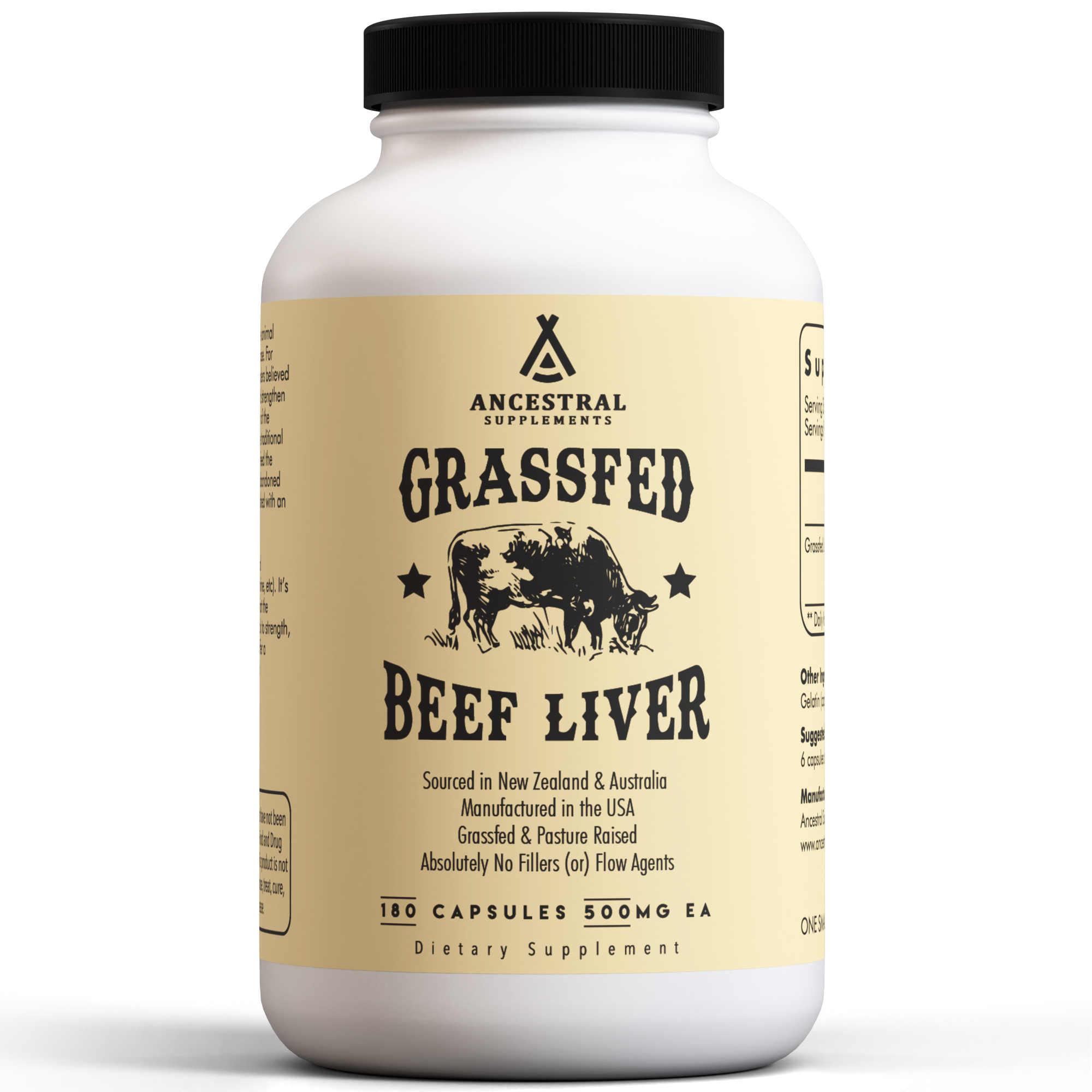
Eating nose to tail can be as approachable as adding some liver to ground meat or using bones to make broth. If you don’t cook liver, Grass Fed Beef Liver gives you another way to include that food alongside your meals.
What to try: Cook one animal-forward dinner with enough left for tomorrow’s lunch. Bison chili, braised beef, or a roast chicken gives you a second nourishing meal without a second round of cooking.
As the days get shorter, your skin may have fewer opportunities to make Vitamin D. Spending less time outside is part of it, but so is the changing sun: the amount of vitamin D-producing UVB that reaches your skin varies by season, location, and time of day. And while sunlight through a window may brighten your workspace, UVB doesn’t pass through glass.
That makes fall a good time to look at your other vitamin D sources. Among whole foods, fatty fish are some of the richest. According to the NIH, a 3-ounce serving of cooked sockeye salmon provides about 570 IU of vitamin D. Eggs and beef liver contain vitamin D too, but much smaller amounts (about 44 IU in one scrambled egg and 42 IU in 3 ounces of braised liver). For context, the recommended daily intake is 600 IU for most adults through age 70.
If salmon, trout, or other vitamin D-rich foods rarely make it onto your plate and you get little sun exposure, a supplement may be worth considering for the darker months.
Fresh fish eggs aren’t easy to find in most kitchens. Our Wild Caught Fish Eggs offer a convenient way to bring wild-caught Hoki roe, and another source of vitamin D into your routine. Think of them as one way to eat more of the animal, alongside fish, eggs, and the rest of a nutrient-dense diet.
Keep spending time outdoors, though. Daylight helps set your body clock even when there isn’t enough UVB for your skin to make much vitamin D. SUN is about more than one nutrient: an outdoor walk and a vitamin D-rich meal can support you in different ways.
What to try: Keep the outdoor walk for its light exposure, movement benefits and potentially some vitamin D if it’s warm enough to expose your skin. Separately, look at how often vitamin D-rich foods such as salmon or trout make it onto your plate. Your needs depend on your circumstances, and feeling tired alone doesn’t tell you whether your vitamin D is low.
One of the quietest seasonal shifts is logistical. The evening walk or outdoor workout that happened easily in July now competes with darkness, cold, dinner and the desire to curl up with a blanket.
The MOVE tenet can change and shape with the season. Instead of waiting to feel more motivated, plan ahead. Change the time or form of the activity. Walk during daylight at lunch. Keep a couple of strength sessions on the calendar. Take a weekend hike. Move with your family rather than treating exercise as something that only counts when you do it alone.
For general health, U.S. physical activity guidance recommends at least 150 minutes of moderate activity per week and 2 days of muscle-strengthening activity for adults. At Ancestral Supplements, we view this as a good starting point, and you can easily combine intentional exercise, outdoor work, and activities you enjoy to meet and exceed this guideline.
Fall also gives you a chance to practice COLD and STRUGGLE in a real way. Go for the walk even when you need a warmer coat. Carry something heavy. Keep showing up for the activities that make you feel strong and capable. The goal of a fall plan isn’t to recreate summer. It’s to find a version of movement that still happens in November.
What to try: Move one activity you normally leave until evening into a daylight window. Keep your strength sessions on the calendar and choose an outdoor activity you’ll still enjoy when the weather cools.
Morning light is only half of the light story. What you do after the sun sets also matters.
If your home stays brightly lit until you climb into bed, your body receives different timing signals than it would from a bright day followed by a darker evening. You can SHIELD your sleep from some of that late light without turning your home into a sleep laboratory: switch off the brightest overhead lights, wind down the tasks you can, and keep a consistent bedtime that gives you enough room to sleep.
This is also a good season to make an evening meal an actual pause. Sit with your people. The BOND tenet doesn’t require a grand event; it can be dinner at a table and a little time together before everyone heads to bed.
What to try: Pick a point after dinner to turn off the brightest lights and wrap up work. Make the next hour feel like evening, whether that means a shared meal, a book, or simply less screen time.
You don’t need to tackle all nine Ancestral Tenets at once. Start with a day that fits your life:
Morning: Eat a real breakfast. Take your coffee outdoors if daylight is available.
Midday: Step outside, walk, and eat a lunch substantial enough to carry you through the afternoon.
Evening: Make a nourishing meal you can share, save the leftovers, lower the lights, and leave enough time for sleep.
Then do it again tomorrow. Repeat what works. Adjust what doesn’t.
If your mood drops significantly with the seasons, or changes in sleep and energy start interfering with daily life, take that seriously. Seasonal affective disorder is a form of depression, and the National Institute of Mental Health distinguishes it from the passing “winter blues.” We recommend you talk with a healthcare professional about what you’re experiencing.
The days will keep getting shorter. That’s a change in your environment worth responding to with more daylight when you can get it, more nourishment from food, and daily habits that help you stay strong and connected through fall.

Halloween used to be about costumes, neighbourhood walks, and a little mischief. Now it’s hard to imagine the holiday without heaps of candy at the...

Walk into a grocery store today and you’ll find more choices than any previous generation could have imagined. The average U.S. supermarket carries...

Drinking enough water matters. But hydration involves more than water alone.If you've spent any time in the health world, you've heard it a thousan...

The Foods Once Valued Most Are Now the Ones Many IgnoreWalk through a grocery store, and you’ll see protein bars, cereal, yogurt cups, frozen meals...
Register to receive a notification when this item comes back in stock.